After successfully passing the training program, the trainee should:
- explain the main hazards of high-pressure compressed-air systems, including stored energy, rupture, projectile risk, adiabatic heating, noise and hose whip;
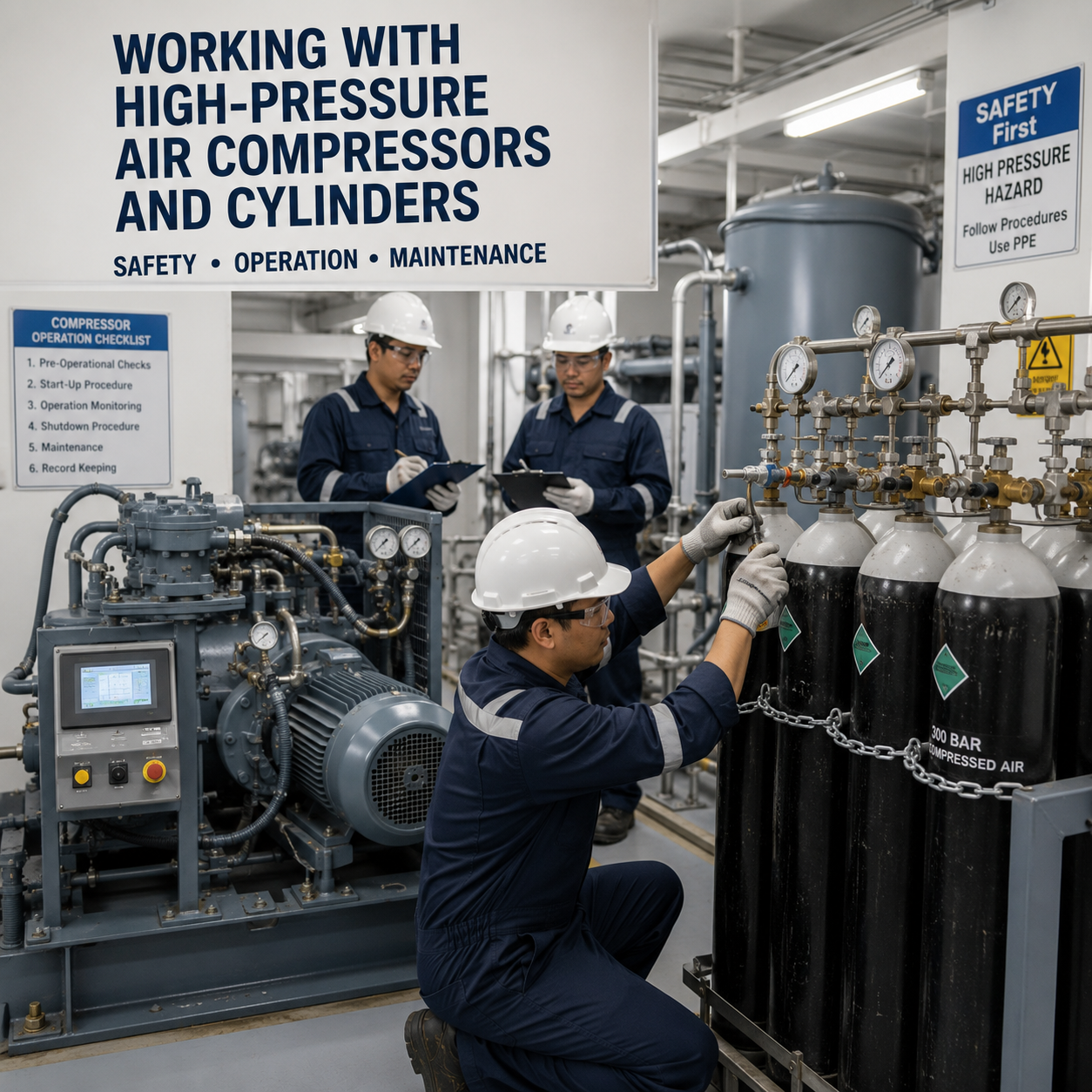
- identify the principal components of a high-pressure air compressor and filling station, including compressor stages, cooling system, filtration, dryer, separators, relief valves, gauges, hoses, couplings and fill panel;
- describe the function of breathing-air purification and the importance of clean air intake, moisture control, oil control, CO/CO2 and hydrocarbon contamination prevention;
- interpret cylinder markings, pressure rating, hydrostatic/periodic test date, service-life information, valve markings and manufacturer limitations;
- carry out a basic visual safety inspection of compressed-air/SCBA cylinders and identify corrosion, dents, cracks, heat exposure, damaged threads, damaged valves, missing labels or other rejection criteria;
- apply safe filling principles, including correct connection, securing of cylinders, controlled pressure increase, temperature-rise awareness, avoiding overfilling and safe disconnection;
- apply safe working principles around compressor rooms, filling panels and cylinder storage areas, including PPE, exclusion zones, ventilation, securing of cylinders and control of ignition/heat sources;
- recognize abnormal operating conditions such as unusual noise, vibration, overheating, leaks, pressure deviation, relief-valve lift, contaminated-air suspicion and equipment alarm indications;
- respond correctly to emergency situations by stopping work, isolating the system, depressurizing only where safe and authorized, marking equipment “Do Not Use”, reporting and recording the event;
- demonstrate practical component-identification and safety-checklist skills using compressor, fill-panel and cylinder inspection examples;
- demonstrate a safety-oriented professional attitude during case studies, checklist exercises and oral/practical assessment.
Entry Standards for admission to the training course are:
- Certificate of Competency, Education Certificate, or Certificate of Proficiency (according to the requirement of the specific fields as defined by the international or national regulations);
- Seamen’s book, Civil passport, or ID.
| Duration | 4 hours |
| language | English |
| Students | 1-16 |
| Assessment | 1 |
| Price | 70 $ |
Course Features
- Lecture 0
- Quiz 0
- Duration 10 weeks
- Skill level All levels
- Language English
- Students 0
- Assessments Yes