After successfully passing the training program, the trainee should:
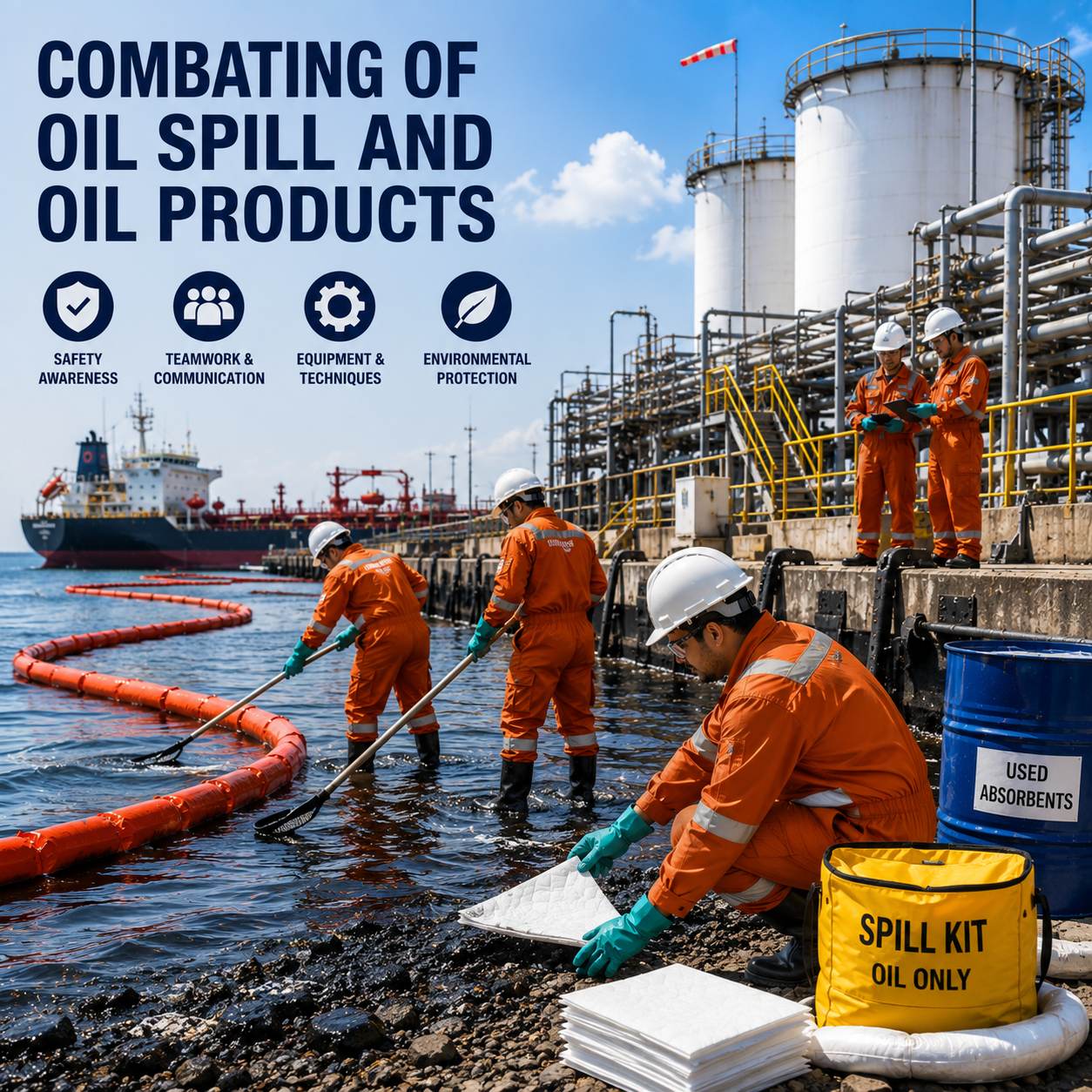
- classify oil and oil product spills according to source, scale, location and immediate hazards;
- describe the behaviour of oil and oil products on land, berth surfaces, drainage systems and port waters;
- conduct safe initial assessment of a spill area, including source identification, flow direction, ignition sources, weather influence and risk to personnel;
- select appropriate PPE and apply site safety measures, exclusion zones, access control and basic ignition-control principles;
- follow the correct notification and reporting chain in accordance with the terminal emergency response plan;
- apply first-response containment principles using absorbents, drain protection, temporary bunds, socks and booms;
- demonstrate basic practical skills in deploying absorbent materials, drain covers and containment equipment;
- explain recovery and clean-up methods, including absorbents, skimmers, pumps, portable tanks and manual collection at familiarization level;
- manage contaminated absorbents, recovered oil/water mixture, temporary storage, labelling and decontamination in a safe manner;
- respond correctly to case-study scenarios such as loading hose leak, tank farm spill, spill near drainage and spill reaching port waters;
- demonstrate a safety-oriented professional attitude during practical exercises, teamwork, checklist exercises and oral/practical assessment.
Entry Standards for admission to the training course are:
- Certificate of Competency, Education Certificate, or Certificate of Proficiency (according to the requirement of the specific fields as defined by the international or national regulations);
- Seamen’s book, Civil passport, or ID.
| Duration | 8 hours |
| language | English |
| Students | 1-16 |
| Assessment | 1 |
| Price | 100 $ |
Course Features
- Lecture 0
- Quiz 0
- Duration 10 weeks
- Skill level All levels
- Language English
- Students 0
- Assessments Yes